
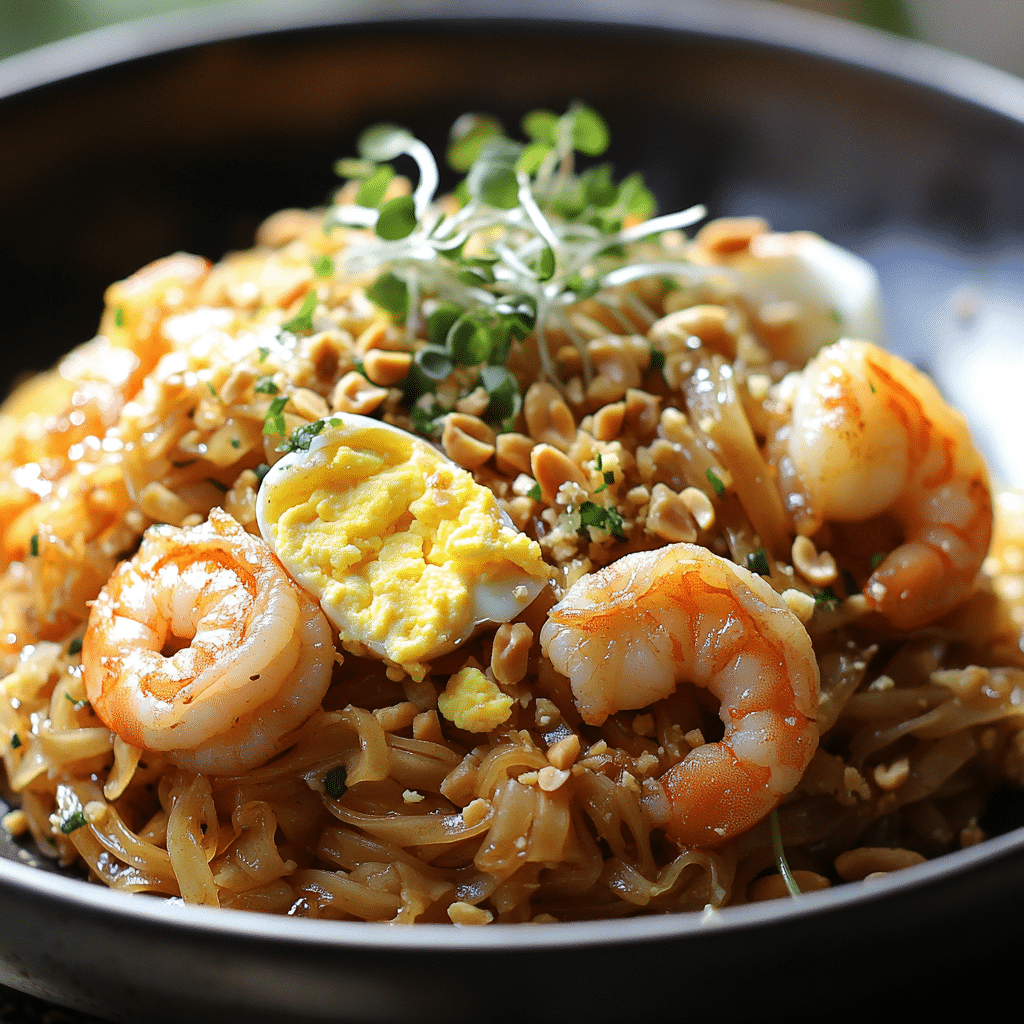
Pad Thai is the crown jewel of Thai street food—a perfect harmony of sweet, sour, salty, and spicy flavors all wrapped around tender rice noodles. While it can seem intimidating due to the unique ingredients, this recipe simplifies the process without losing the authentic taste. The key to the best Pad Thai is the sauce, which relies on tamarind paste for its signature tang. With a few simple steps and quick stir-frying, you can create a vibrant, restaurant-quality meal that is far superior to any takeout.
Why You’ll Love This Recipe
Perfect for Fast Dinners
Once you have your ingredients prepped, the actual cooking time for Pad Thai is less than ten minutes. It is a high-speed stir-fry that is perfect for busy weeknights when you want a meal that is both healthy and exciting.
Tamarind & Peanut Highlights
The soul of this dish is the balance between the tart tamarind paste and the nutty crunch of roasted peanuts. Combined with palm sugar (or brown sugar) and fish sauce, it creates a flavor profile that is uniquely Thai and incredibly addictive.
Ingredients
- 4 oz flat rice noodles
- 2 tbsp tamarind paste
- 2 tbsp fish sauce
- 2 tbsp palm or brown sugar
- 1/2 lb shrimp or chicken
- 2 large eggs
- 1 cup bean sprouts
Instructions
- Soak noodles in warm water for 30 mins until pliable. Whisk sauce ingredients.
- Sauté garlic and protein in a hot wok until cooked.
- Scramble eggs in the center, then add noodles and sauce.
- Toss vigorously until sauce is absorbed and noodles are tender.
- Fold in bean sprouts and top with crushed peanuts and lime.
Ingredient Highlights & Substitutions
Essential Ingredients
Flat rice noodles are the base. Tamarind paste is the most important ingredient for the authentic sour flavor. Fresh bean sprouts and garlic chives provide a necessary crunch and fresh herbal note.
Smart Substitutions
If you can’t find tamarind paste, you can use a mixture of lime juice and brown sugar as a substitute. If you don’t have garlic chives, green onions work perfectly well. For the protein, you can easily swap the shrimp for chicken, beef, or extra firm tofu.
| Flavor | Ingredient | Function |
|---|---|---|
| Sour | Tamarind Paste | The signature tang |
| Salty | Fish Sauce | Umami and depth |
| Sweet | Palm/Brown Sugar | Balances the acidity |
Step-by-Step Instructions
Prep Phase
Soak your rice noodles in warm (not boiling) water for about 20-30 minutes until they are flexible but still firm. In a small bowl, whisk together the tamarind paste, fish sauce, sugar, and chili flakes. Chop your peanuts and prepare your protein and vegetables. Stir-frying happens fast, so having everything ready is essential.
Cooking Phase
Heat oil in a large wok or skillet over high heat. Sauté the garlic and protein until cooked through. Push everything to the side and scramble the eggs in the center. Add the drained noodles and the sauce. Stir-fry vigorously until the noodles are tender and have absorbed the sauce. Fold in the bean sprouts and chives for the last 30 seconds. Serve topped with crushed peanuts and plenty of fresh lime wedges.
Pro Tips for Perfect Results
Technique Secrets
The “Noodle Soak” secret: Never boil your rice noodles. If you boil them, they will become mushy and break in the pan. Soaking them in warm water allows them to reach the perfect “al dente” state during the quick stir-fry. Another secret is to use high heat to ensure the sauce caramelizes slightly on the noodles.
Common Mistakes to Avoid
Avoid using too much sauce; the noodles should be coated, not swimming. Also, don’t overcook the bean sprouts; they should remain crunchy to provide a texture contrast to the soft noodles.
Serving Ideas & Pairings
Presentation & Plating
Serve on a large plate with a mound of crushed peanuts, extra chili flakes, and a wedge of lime on the side. A few sprigs of fresh cilantro or extra bean sprouts on top add a professional touch.
Pairing Suggestions
Pad Thai is a complete meal, but it pairs beautifully with a fresh starter like Bruschetta Recipe Easy Best Bruschetta Recipe if you are doing a fusion-themed dinner party.
Frequently Asked Questions
Q1: Why are my noodles clumping?
You may have soaked them for too long or didn’t stir-fry them vigorously enough with the sauce.
Q2: Can I make this vegan?
Yes! Use soy sauce instead of fish sauce and use tofu and extra vegetables as your protein.
Q3: How do I store leftovers?
Pad Thai is best eaten fresh, but leftovers can be stored for 2 days. Reheat with a splash of water to loosen the noodles.
Conclusion
This easy and best Pad Thai recipe is a gateway to the incredible flavors of Thai cuisine. By focusing on the balance of the sauce and the proper preparation of the noodles, you can achieve a result that is truly spectacular. It is a vibrant, fun, and flavor-packed recipe that will quickly become a favorite in your household.